
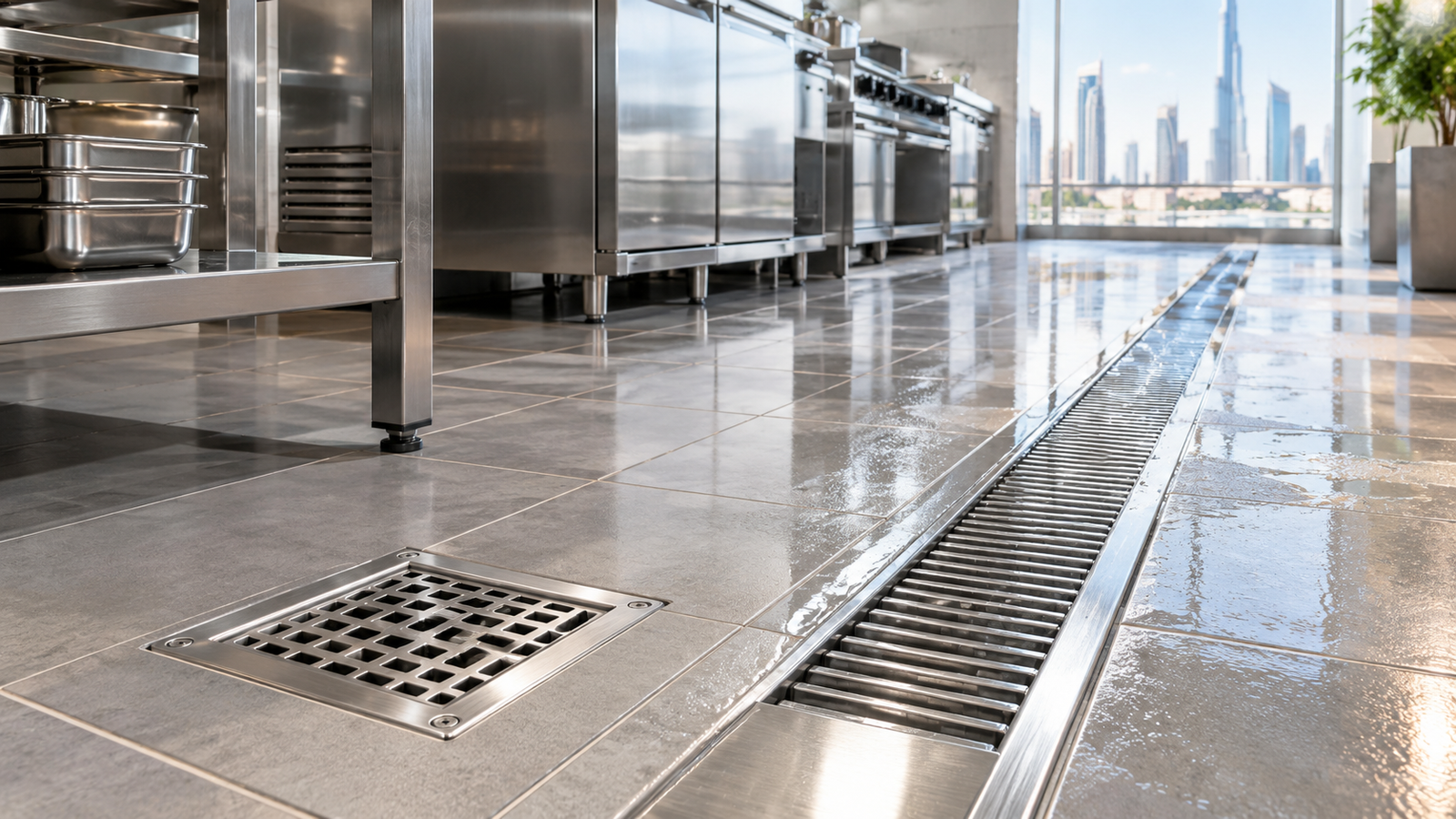
Material selection is one of the key aspects when it comes to designing a sustainable drainage system. In the case of the UAE, materials used for constructing drainage parts could be subjected to moisture, humidity, heat, and salt and chloride in case of coastal regions. The selection of appropriate material becomes extremely important for drainage projects.
One of the best materials for drainage application that needs additional protection against corrosion and durability is SS316 stainless steel. It can be attributed to the material composition and its performance under various conditions.
What Is SS316 Stainless Steel?
SS316, or AISI 316 stainless steel, is an austenitic stainless steel alloy consisting of chromium, nickel, and molybdenum. SS316 has improved corrosion resistance due to the presence of molybdenum.
Generally speaking, SS316 is more suitable for applications that require improved corrosion resistance than SS304. However, this does not imply that SS316 should be used for all drainage installations.
The choice of material is contingent on environmental factors, specific application requirements, project requirements, and exposure conditions.
From the standpoint of drainage installations, this information can be relevant, since drains and channels are often exposed to moisture and water for prolonged periods of time.
Why Is SS316 Suitable for UAE Drainage Systems?
1. Improved Corrosion Resistance
One of the main reasons SS316 is considered for drainage applications is its corrosion resistance. Drainage products can encounter water, cleaning chemicals, moisture and, in coastal environments, chloride-containing air.
The molybdenum content in SS316 provides improved resistance to chloride-related corrosion compared with standard stainless-steel grades such as SS304. This makes SS316 particularly relevant for projects located near the coast or in applications with frequent exposure to moisture.
2. Suitable for Demanding Environmental Conditions
The UAE has a hot climate, with many buildings also operating in air-conditioned environments where temperature and humidity conditions can vary. Drainage components in kitchens, bathrooms, balconies, roofs and other wet areas need to withstand repeated exposure to moisture.
SS316 provides a durable material option for applications where long-term resistance to environmental exposure is important. However, actual performance also depends on correct product selection, installation, cleaning and maintenance.
3. Hygienic and Easy to Maintain
The stainless steel possesses a smooth surface and hence can be easily cleaned and therefore is suitable for hygienic purposes.
This is especially applicable in commercial kitchens, restaurants, hotels, hospitals and food processing industries, since the drainage system may require periodic cleaning. The SS316 drainage systems are capable of maintaining a hygienic drainage system when used together with good maintenance practices.
4. Strong and Durable
Drainage systems in commercial and industrial buildings may experience regular water flow, cleaning activities and physical loads. The strength and durability of stainless steel make it suitable for a wide range of drainage applications.
The exact load capacity and performance depend on the design and specifications of the individual drainage product. Therefore, contractors and MEP professionals should select products according to the requirements of each project rather than relying only on the material grade.
5. Clean Architectural Appearance
However, in certain instances, drain elements will be exposed and become part of the completed structure’s aesthetic. The use of stainless steel gives an aesthetically appealing look that is suitable for use in places such as hotels, office buildings, kitchens, showers, among other architectural installations.
Both functionality and aesthetics of stainless steel make it a suitable material for use in drainage elements.
Where Are SS316 Drainage Systems Used in the UAE?
SS316 drainage products can be considered for various commercial, residential and industrial applications. Common examples include:
- Commercial kitchens and restaurants
- Hotels and resorts
- Hospitals and healthcare facilities
- Shopping malls and commercial buildings
- Industrial facilities
- Balconies and terraces
- Roof drainage applications
- Shower and wet areas
- Swimming pool surroundings
- Food-processing facilities
Different applications require different drainage designs. Floor drains, channel drains, shower drains, balcony drains, roof drains, slot drains and cleanouts may each have different capacity, installation and load requirements.
SS316 vs SS304 for Drainage Applications
Both SS316 and SS304 are widely used stainless-steel grades, but their properties make them suitable for different environments.
| Feature | SS316 | SS304 |
| Corrosion resistance | Higher | Good |
| Chloride resistance | Better | Lower |
| Coastal applications | Well suited for demanding conditions | May be suitable depending on exposure |
| Molybdenum | Present | Not present |
| General applications | Demanding environments | General-purpose applications |
SS316 can therefore be a practical choice when drainage components face greater exposure to moisture, chlorides or corrosive conditions. For less demanding environments, SS304 may be sufficient.
What to Consider When Choosing SS316 Drainage Products
Selecting a drainage product involves more than choosing the stainless-steel grade. Contractors, architects and MEP consultants should also consider:
- Location of the drainage system
- Expected water and moisture exposure
- Exposure to salt or chlorides
- Required drainage capacity
- Expected load
- Drain size and dimensions
- Surface finish
- Cleaning and maintenance requirements
- Installation method
- Project specifications and applicable standards
Correct sizing and installation are essential for effective drainage. The product should be selected according to the specific requirements of the building and its intended use.
SS316 Drainage Products for UAE Projects
The Flow Tech company provides the residents of UAE with stainless-steel drainage products that cater to various needs. Based on the specific requirement of the project, it could involve SS316 floor drain, channel drain, shower drain, balcony drain, roof drain, slot drain and cleanouts.
The right selection of drainage product can go a long way in fulfilling the need for water flow, installation, durability and maintenance.
Conclusion
SS316 is one of the essential material selections that may be made when considering drainage systems due to their resistance to corrosion and other properties.
It is not the case that SS316 must be used at any point in time; there are different factors that must be taken into account before deciding on what material to use.
By taking the time to understand the difference between the various grades of stainless steel that are available, one can make an informed decision about the type of material to use for their drainage system projects in the UAE.