
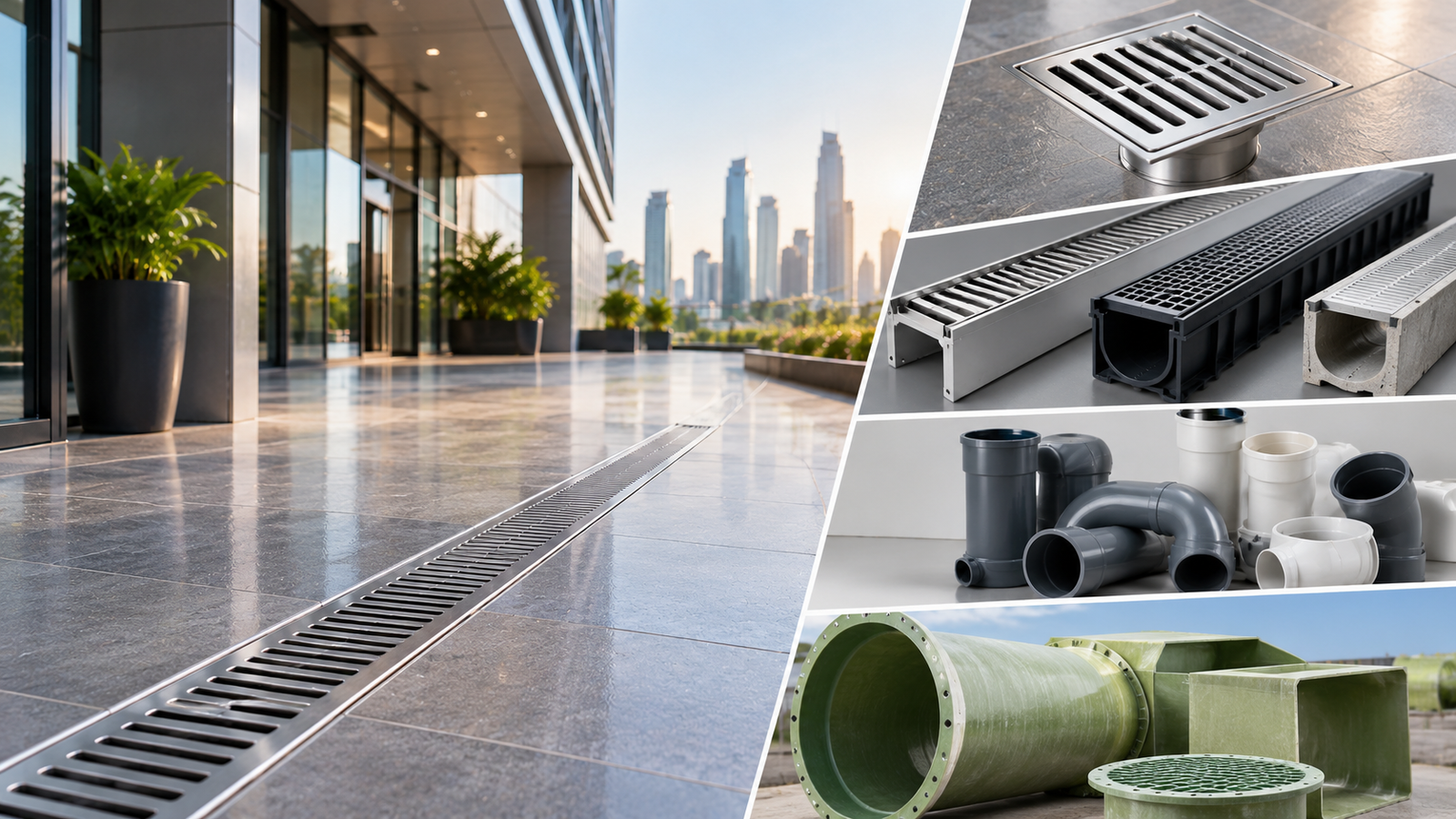
Choosing the drainage materials is an important part of designing a reliable commercial building. Offices, hotels, shopping centres, hospitals, restaurants and industrial facilities all have drainage requirements. The wrong material or an unsuitable product can lead to corrosion, blockages, leakage, frequent maintenance and unnecessary repair costs.
For construction projects in Dubai drainage components must be selected according to their application, exposure conditions expected water flow and maintenance requirements. Understanding these factors helps contractors, MEP consultants and building owners make decisions before installation.
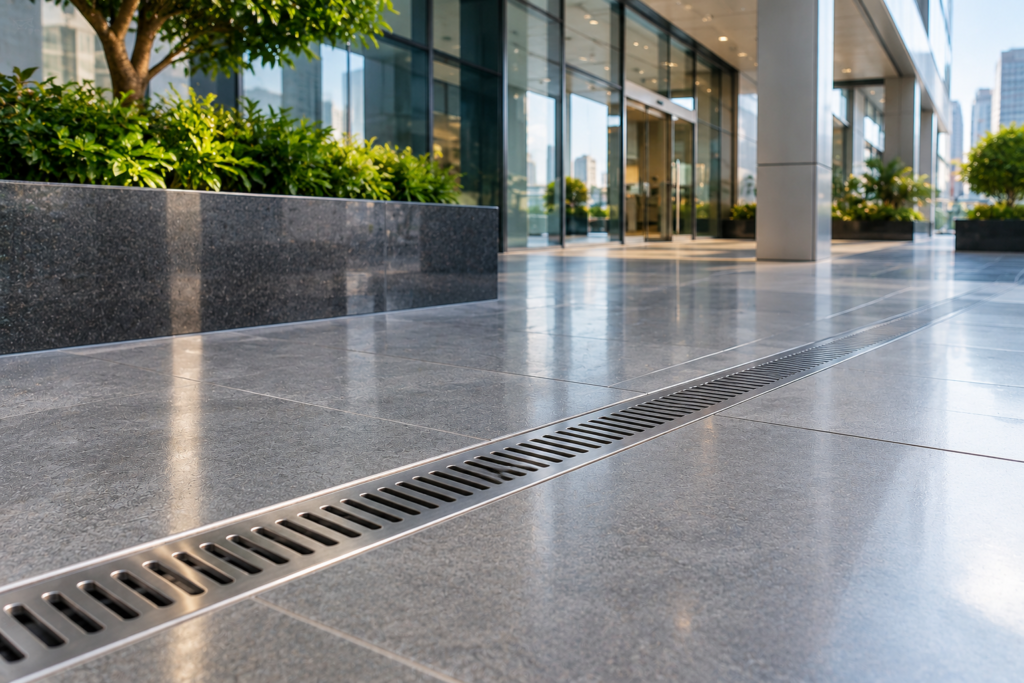
Why Drainage Material Selection Matters
A drainage system does more than remove wastewater. It helps protect floors, walls, equipment and the surrounding structure from water-related problems.
Selecting materials can help to:
- Reduce the risk of corrosion and premature deterioration.
- Maintain efficient water flow and drainage performance.
- Improve hygiene in areas that require regular cleaning.
- Simplify inspection, cleaning and maintenance.
- Reduce avoidable repair and replacement expenses.
The right choice depends on the environment and the function of each drainage component than price alone.
1. Understand the Requirements of the Building
Before choosing any drainage product identify the buildings purpose and the conditions in which the system will operate.
For example a hotel bathroom may require hygienic floor drains while a commercial kitchen needs drainage components that can handle cleaning and grease-related waste. An industrial facility may require materials for heavier use or exposure to particular chemicals.
Consider these questions before selecting a product:
- What type of water or wastewater will pass through the system?
- Will the component be exposed to cleaning chemicals, moisture or outdoor conditions?
- How water must the system handle?
- Will the area experience heavy foot traffic or equipment loads?
- How easily can the component be accessed for maintenance?
These details help determine the material, size, design and installation requirements.
2. Choose Materials Based on Their Application
materials offer different advantages. The best option depends on the intended use and the manufacturers specifications.
Stainless Steel
Stainless steel is widely used for floor drains, drainage channels, gratings and other components where durability, cleanability and corrosion resistance’re important.
The grade matters. SS304 and SS316 have corrosion-resistance properties so the choice should reflect the environment, exposure to salts or chemicals cleaning methods and project specifications. Neither grade should be selected without considering its operating conditions.
Stainless steel can be an option for commercial kitchens, washrooms, hospitality facilities and selected outdoor applications.
PVC and UPVC
PVC and UPVC products are used in plumbing, drainage and fabricated building applications. Their suitability depends on the product design, operating temperature, chemical exposure, pressure requirements and installation conditions.
For projects involving plastic drainage components confirm that the selected product is compatible with the intended system and applicable project standards.
GRP (Glass-Reinforced Plastic)
GRP is used in applications where a lightweight corrosion-resistant material’s beneficial. Depending on the design and specification GRP products can be considered for selected water-management tank-related and infrastructure applications.
Before choosing GRP review the products requirements, chemical compatibility, installation method and expected service conditions.
3. Consider Dubais Environmental Conditions
Environmental exposure is a factor when selecting materials for buildings in Dubai and other parts of the UAE.
Outdoor installations may experience sunlight, high temperatures, humidity and exposure to airborne salts in coastal locations. Indoor systems may face washing, cleaning chemicals or continuous moisture.
When reviewing product options check:
- The materials resistance to the expected environment.
- Suitability for outdoor installation.
- Compatibility with cleaning agents and wastewater.
- The manufacturers installation and maintenance guidance.
- Relevant technical. Project requirements.
A product that performs well in one location may not be the option for another. Material selection should reflect the conditions at the installation site.
4. Check Drainage Capacity and Product Dimensions
Even a durable material cannot compensate for a designed drainage system. The drainage component must be suitable for the required flow rate and connected pipework.
Before finalising a product review the drain or channel dimensions, outlet position, pipe connection, installation depth and expected water volume.
For kitchens, washrooms, utility rooms and industrial areas drainage requirements can vary considerably. Engineers should calculate the required capacity and select components accordingly than choosing a product based on appearance or dimensions alone.
Correct. Coordination with the buildings plumbing design help support reliable drainage performance.
5. Prioritise Easy Cleaning and Maintenance
Drainage systems require inspection and cleaning to remain effective. Components that are difficult to access can make maintenance more time-consuming and increase the likelihood of blockages.
For buildings consider drainage products with practical access for inspection and cleaning where appropriate. Removable grates and accessible cleanout points can help maintenance teams remove accumulated debris and inspect the system.
A maintenance plan should identify inspection frequency, cleaning procedures and the signs that may indicate a developing problem, such as drainage, unpleasant odours or recurring blockages.
The maintenance schedule should reflect the facilitys usage and the manufacturers recommendations.
6. Check Installation Compatibility
Drainage products must work with the surrounding floor, waterproofing system, pipework and structural arrangement.
Before installation confirm that:
- The product dimensions match the approved drawings.
- Pipe connections and outlet positions are compatible.
- Floor levels and gradients water towards the drain.
- Waterproofing details are coordinated with the drainage assembly.
- The component can be. Maintained as intended.
Poor coordination between drainage components and other building systems can cause leakage, standing water or difficult maintenance access. Reviewing these details before construction helps avoid site issues.
Installation should be completed by personnel in accordance with the approved design, applicable codes and product instructions.
7. Compare Long-Term Value, Not Just Initial Cost
The cheapest drainage component may not provide the value over the life of a building. Purchase price is one part of the overall cost.
When comparing products consider quality, expected service conditions, installation requirements, cleaning needs, replacement availability and warranty terms.
A suitable product that is correctly installed and maintained may help reduce disruptions and repair expenses. However the final decision should always be based on verified suitability rather than broad claims about lifespan or performance.
For projects request product specifications and compare the options against the same set of requirements.
How Flow Tech Can Support Commercial Building Projects
Flow Tech Trading FZ-LLC supplies construction and water-management products, including stainless steel components, PVC and UPVC fabrication and GRP-related solutions for different project requirements.
Contractors, consultants and facility teams can review the product range and discuss project-specific dimensions, material choices and fabrication needs before finalising their selections.
The goal is to identify components that match the intended application, installation conditions and technical specifications of the project.
Conclusion
Choosing the drainage materials for commercial buildings in Dubai requires more than comparing prices or selecting a familiar product. Building use, environmental exposure, drainage capacity, material compatibility, installation details and maintenance access all influence the decision.
By evaluating these factors project teams can make more informed choices and reduce the risk of avoidable drainage problems. Working with a supplier that understands construction-material requirements can also help teams identify suitable options for their projects.
Frequently Asked Questions
What should be considered when choosing drainage materials for buildings?
Consider the buildings use, water flow, environmental exposure, corrosion resistance, cleaning requirements, installation compatibility and relevant technical standards.
Is steel suitable for commercial drainage systems?
Stainless steel can be suitable for commercial drainage applications. The correct grade and design depend on the installation environment, exposure, to chemicals or salts expected use and project specifications.
When are PVC and UPVC drainage products used?
PVC and UPVC products are used in plumbing, drainage and fabricated applications. Suitability depends on the products specifications and the operating conditions of the system.
Why is drainage maintenance
Regular inspection and cleaning help identify debris buildup, blockages and other issues before they cause more serious operational problems.
Should drainage products be selected before installation begins?
Yes. Selecting products during the design and planning stage helps coordinate dimensions, pipe connections, floor levels and waterproofing details before installation work progresses.