

kitchens produce a lot of wastewater that has fats, oils and grease in it. Restaurants, hotels, cafeterias, catering places and food preparation areas need to handle this wastewater to keep the drainage systems clean and avoid plumbing issues. One important part of a kitchen drainage system is a grease trap.
Picking the grease trap for commercial kitchens in Dubai depends on several things, like the size of the kitchen how much wastewater is made the kind of food being prepared where it will be installed and how much maintenance is needed. Knowing these things helps businesses choose the option for their daily work.
What Is a Grease Trap. How Does It Work?
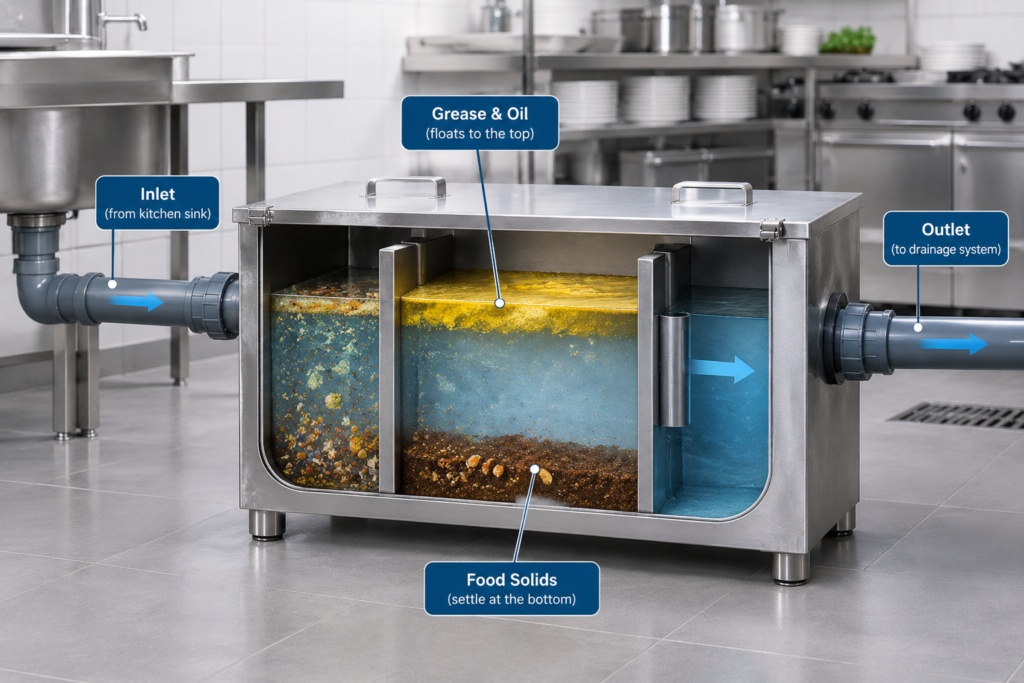
A grease trap is a plumbing item that is meant to take fats, oils and grease out of wastewater before it goes into the drainage system. It makes the water move slowly letting the grease and oil float to the top while the heavier bits sink to the bottom.
The water that has some of the grease and oil removed then goes out through the exit into the drainage system. The. Solid waste stay inside the unit until they are taken out during cleaning and maintenance.
If there is no way to manage grease, fats and oils can build up inside the pipes. This can slow down the water. Increase the chance of clogs, bad smells and expensive plumbing fixes.
Why Do Commercial Kitchens Need a Grease Trap?
Grease traps help keep the kitchen drainage working. Their advantages include:
clogged pipes: Taking out grease before it goes into the drainage helps stop grease from building up in the pipes.
Better drainage: Managing grease properly makes it less likely that the water will get slow because of built-up fats and oils.
Better kitchen cleaning: Regular cleaning helps control the smell from grease and keeps the drainage tools working well.
Lower costs for fixing things: Stopping too much grease from building up can reduce the need for emergency plumbing help.
Helping with water waste: A chosen and kept unit helps commercial kitchens handle water that has grease in a better way.
A grease trap does not mean that waste can be handled any way. Food scraps, cooking oil and large amounts of grease should be collected separately of being washed into the sink.
Types of Grease Traps Used in Commercial Kitchens
kitchens have different needs for their drainage. Knowing about the choices can help businesses pick the system.
1. Under-Sink Grease Traps
Under-sink units are placed under the kitchen sink or near washing areas. They can work for food service places with not much water use as long as the unit can handle the flow expected.
Their small size can make it easier to fit them where there is not floor space. However the size and access for cleaning should be checked before choosing this type.
2. Larger-Capacity Grease Traps
Bigger units may be better for restaurants, hotels, schools and other places that make a lot of grease-containing water.
The size needed depends on the number of sinks and other fixtures the amount of water how busy the kitchen’s the manufacturers size rules. A bigger unit is not always the choice; it must be the right size for the job.
3. Commercial Grease Trap Systems
Commercial grease trap systems are made for use in cooking areas. Depending on the design they can be inside or outside in a service area.
When looking at products think about the material they are made from the size of the connections how easy it is to clean the expected water flow and how they fit with the drainage plan.
6 Factors to Consider When Choosing a Grease Trap in Dubai
1. Size of the Kitchen and Amount of Water Used
The first step is to guess how water the kitchen makes at its busiest times. A small café and a big hotel kitchen will need things.
Think about how sinks, dishwashers, preparation areas and other connected items there are. Check with the makers size instructions or a trained plumber to find the size.
2. Type of Cooking
The amount of grease going into the drainage system changes with the menu. How food is cooked. Kitchens that fry food cook meat or wash things with grease might make fats and oils than places with lighter cooking.
Understanding these differences helps decide how much grease management is needed.
3. Material and Quality of the Trap
The material should fit the place it is installed in the conditions it works in how often it is. How long it will last.
When checking a grease trap look at how it stands up to rust how strong it is, the lid design, the seals and the overall build. Make sure the material is right for the place it is going to be in, whether inside or outside.
4. Space for Installation and How Easy It Is to Get To
A grease trap should be in a place that makes it easy to check, clean and take out the waste. A unit that is hard to reach might not be cleaned often making smells and drainage problems likely.
Before putting it in check the size the positions of the entrance and exit the pipe connections and how much space is needed for cleaning.
5. How Often It Needs to Be Cleaned and Maintained
Every grease trap needs to be checked and cleaned on a basis. How often depends on how much it can hold how much grease is in it how busy the kitchen. What the maker says.
Choose a design that lets you get to the grease and solids safely. Ask the seller about how to clean it replacement parts and when to check it.
6. Local Building and Plumbing Rules
Commercial kitchen projects in Dubai need to follow the building, plumbing, drainage and water waste rules. These can change depending on the project. Who is in charge.
Before buying a unit check the needed details with the project planner, the plumber or the right authority. The size and amount of the unit should match the approved drainage plan.
Common Mistakes When Choosing a Grease Trap to Avoid
Choosing a trap by price or how big it looks can cause problems. Avoid these mistakes:
– Picking a unit without checking how much water is expected.
– Not thinking about how many sinks and devices are connected.
– Putting it in a place where cleaning is hard.
– Not checking if the material is right and the product details.
– Thinking a trap does not need checking once it is put in.
– Not checking the project and drainage rules before buying.
Planning carefully helps avoid installation issues and supports long-term work.
How to Keep a Grease Trap Working Well
Even a good designed trap needs care to work right.
Check it often: Look at how much grease has built up the solids at the bottom smells and signs that the water is not moving well.
Take out the waste: Clean the unit as the design and maker say. Throw away the grease and solids in the way instead of washing them into the drainage system.
Check the entrance and exit parts: Look for leaks, broken seals or signs of blockage that could affect how it works.
Keep a record of maintenance: Writing down when you checked and cleaned it helps the kitchen people see how it is used and plan cleanings before problems happen.
Get help from professionals if needed: If there are smells, repeated blockages or drainage issues have the system checked to find what is wrong.
Choosing the Right Grease Trap for Your Project
The right grease trap should match the kitchens amount of water the kind of cooking the space available and the cleaning needs. Looking at these things before buying can help companies avoid traps that’re too small and other problems.
Flow Tech Dubai sells traps for use in commercial and building drainage projects. Before choosing a model look at the specs, size, connections and what it is used for to make sure it fits your project.
For restaurants, hotels, cafeterias and other food places choosing the grease trap is an important step in keeping a good and easy to handle kitchen drainage system.
Asked Questions
What does a grease trap do in a commercial kitchen?
A grease trap takes fats, oils and grease out of wastewater before it goes into the drainage system helping stop grease from building up in the pipes.
How do I choose the size for a grease trap?
The size depends on the amount of water the number of sinks and devices connected, how busy the kitchen is and what the maker says. A trained plumber can help find the size.
How often should a grease trap be cleaned?
There is no time for every setup. How often it is cleaned depends on how much grease builds up how busy the kitchen is, the size of the trap and what the maker says. Checking often helps find the schedule.
Can a grease trap stop all kitchen drain blockages?
No. It helps stop blockages from grease. Food bits, things that should not be there bad pipe setups and other drainage issues can still cause problems.
What should I look at before buying a grease trap in Dubai?
Check the size, the material, the size, the connections how easy it is to clean the details and if it meets the needs of your project.
Is a grease trap always better?
Not at all. The unit must be the size for the water flow and the job. Making it too big or too small, without checking can cost more. Cause problems.
Conclusion
Choosing the right grease trap is essential for maintaining an efficient drainage system in commercial kitchens. By considering wastewater volume, kitchen activities, material quality, installation space, and maintenance requirements, businesses can select a solution that suits their operational needs. Regular cleaning and proper waste disposal also help reduce grease buildup and prevent avoidable drainage issues. For commercial kitchen and drainage projects in Dubai, reviewing the available grease trap specifications from Flow Tech Dubai can help you identify a suitable product for your requirements.