
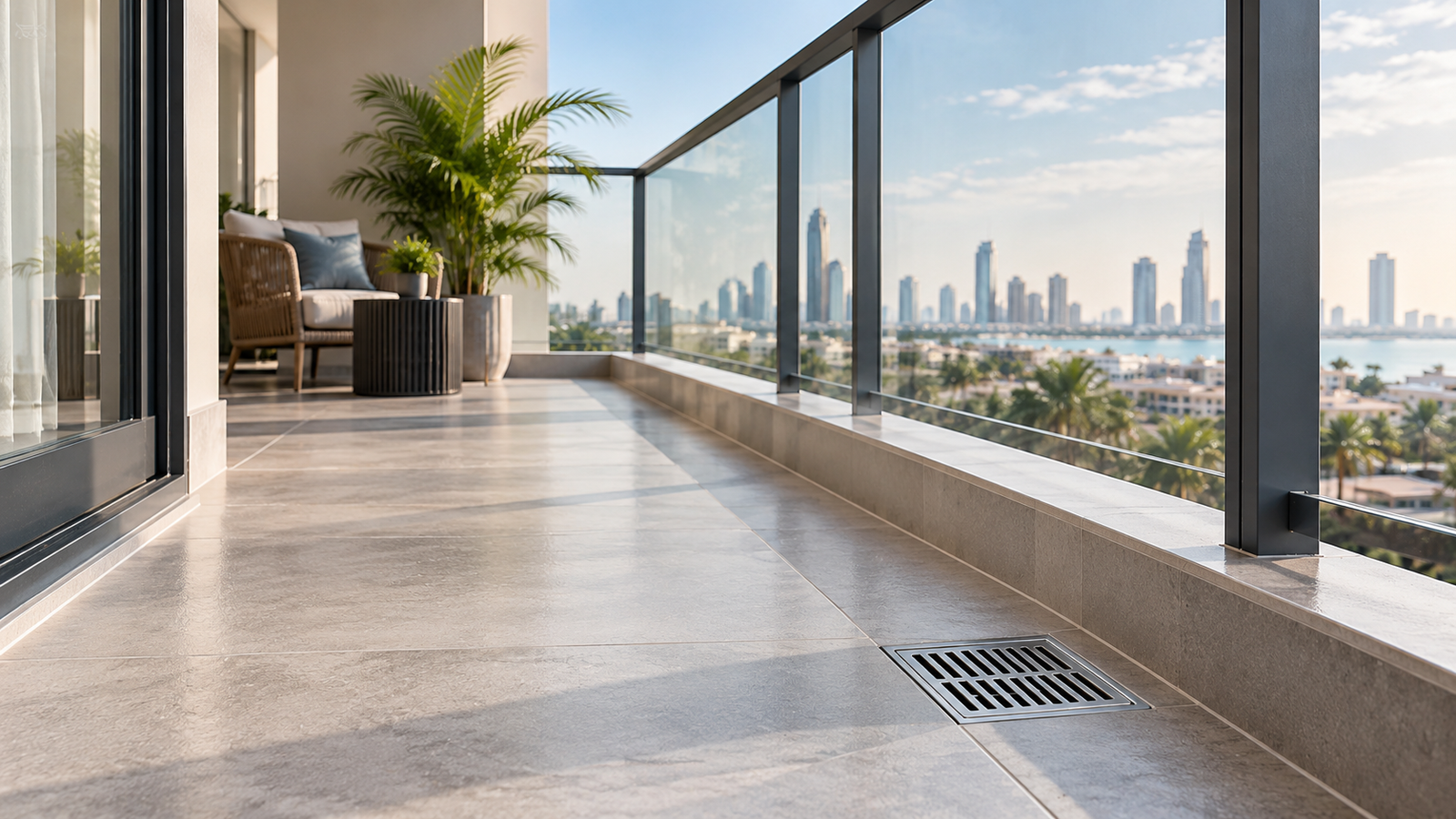
Balconies give extra outdoor space to homes, apartments, villas, hotels and office buildings.. If the drainage isn’t right rainwater can pool on the floor. That makes the surface slippery damages the flooring and causes long-term moisture problems.
In places like Dubai, where buildings face rain, heat, dust and changing weather balcony drainage must be planned carefully. Whether you’re building new or updating a balcony. Picking the right drainage components and placing them correctly makes water flow better. Makes upkeep easier.
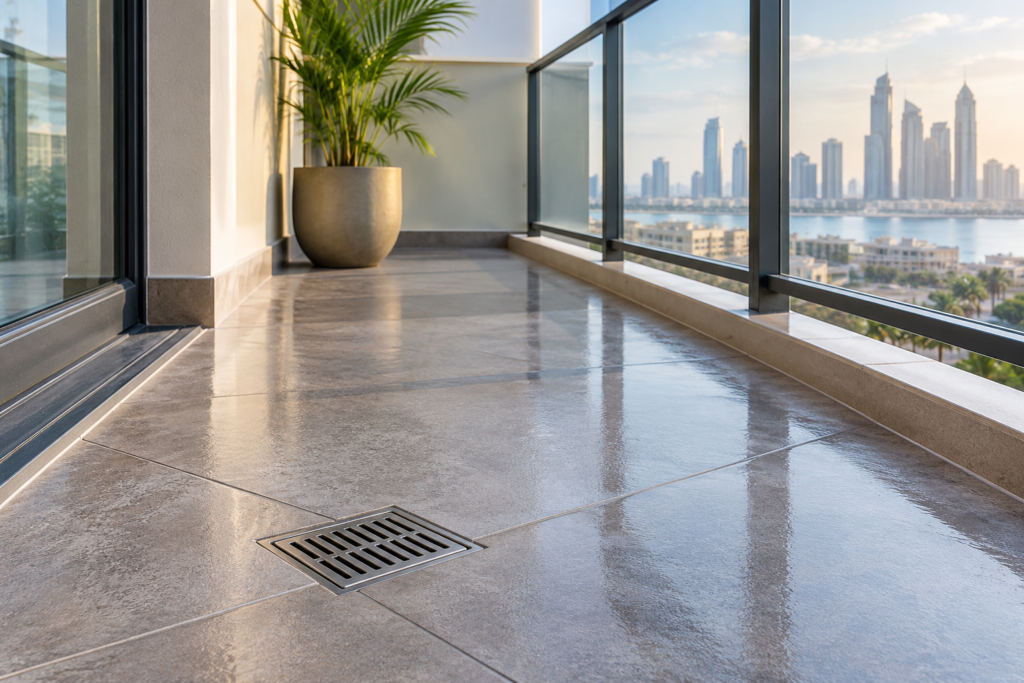
1. Prevents Water Accumulation on Balcony Floors
The job of balcony drainage systems is to move rainwater away quickly. If water can’t find a way out it collects in spots or stays near the edges.
Puddles are annoying and dangerous. They make people slip. Good floor gradients and well-placed drainage outlets help guide water away from where people walk.
During design builders should look at the balcony size how slope the floor needs how much rain it will get and where the drain will go.
2. Helps Protect Building Finishes
Water left on the floor can hurt grout, sealants, tiles and other materials. If it gets into spots or unsealed joints it can cause dampness, mold and decay.
A good balcony drainage system works with a waterproofing system. Drainage clears the surface while waterproofing stops water from going into the building’s structure.
These two parts should be planned together. Not as jobs.
3. Supports Effective Waterproofing
Waterproofing doesn’t just depend on the membrane or coating. The drain’s placement, floor slope edge details. How it connects to the system all matter.
The drain must fit with the waterproofing design. Be installed exactly as planned. Special care is needed at joints and around the drain. Poor work there can cause leaks.
Trained professionals should check that the whole setup meets the project’s rules and local building codes.
4. Choose Balcony Drainage Components
The right drain depends on the balcony’s shape how much water it will handle, how it’s built and what finishes are used.
When picking balcony drains think about:
- Material durability: Use materials that hold up in conditions and the local climate.
- Drainage capacity: Make sure the drain can handle the expected amount of rainwater.
- Outlet dimensions: Match the drain size to the drainage pipes.
- Maintenance access: Pick a design that’s easy to check and clean.
- Waterproofing compatibility: The drain must work well with the waterproofing system.
- Appearance: Consider how the drain looks with the floor tiles and the building’s style.
The best drain meets the job’s needs. Not looks good or costs less.
5. Prevent Blockages Through Regular Maintenance
Dust leaves, trash and other stuff can build up around drains. Even a designed system can fail if the outlet is blocked.
Regular checks should include removing debris making water flows and looking for damage. Maintenance teams should inspect drains before and after rain.
If a blockage won’t clear use cleaning methods. Don’t damage the drain or pipes.
6. Common Balcony Drainage Mistakes to Avoid
Some problems can hurt drainage:
Incorrect floor slope: If the floor doesn’t slope toward the drain water will stay in one spot.
Poor outlet positioning: A drain in the place can leave water trapped elsewhere.
Incompatible components: A drain that doesn’t match the pipes or waterproofing can cause installation problems.
Insufficient maintenance access: Drains that are hard to reach stay blocked longer.
Ignoring details: A good drain can’t fix waterproofing or loose seals.
Good planning the right parts and correct installation avoid most of these issues.
7. Consider Drainage During Construction and Renovation
Balcony drainage should be part of planning. Engineers and builders can set floor levels connect drains plan waterproofing and place outlets before tiles or finishes go on.
For buildings a check can show if water pooling is from debris, broken parts, bad slope or a deeper waterproofing issue.
If you change drains or pipes have experts check that it fits the system and follows building rules.
Choosing Reliable Balcony Drainage Solutions in Dubai
A good balcony drainage system needs the products, smart design, correct installation and regular upkeep. Taking care of these steps early protects the building keeps the balcony safe and cuts down on repairs.
Flow Tech Dubai provides drainage and construction parts for homes, offices and big projects across the UAE. When planning a balcony or renovation teams should check their needs and choose balcony drainage solutions that fit the building’s design and performance.
A thought-out drainage system keeps balconies working, safe and easy to maintain for years.
Asked Questions
Why is balcony drainage important?
It helps get rid of rainwater stops puddles and protects the floor and waterproofing.
What should be considered when choosing a balcony drain?
Think about drainage capacity, material, size, access for cleaning with waterproofing and the balcony layout.
How can balcony drain blockages be prevented?
Clear leaves and dirt regularly check the drain. Make sure water flows. Use cleaning if a blockage won’t clear.
Can a balcony drain solve waterproofing problems?
No. Drainage and waterproofing do jobs. They need to work. Leaks may come from the membrane, joints or connections, around the drain.
When should balcony drainage be checked?
Check during design and installation during maintenance and when water collects or drains slow.