
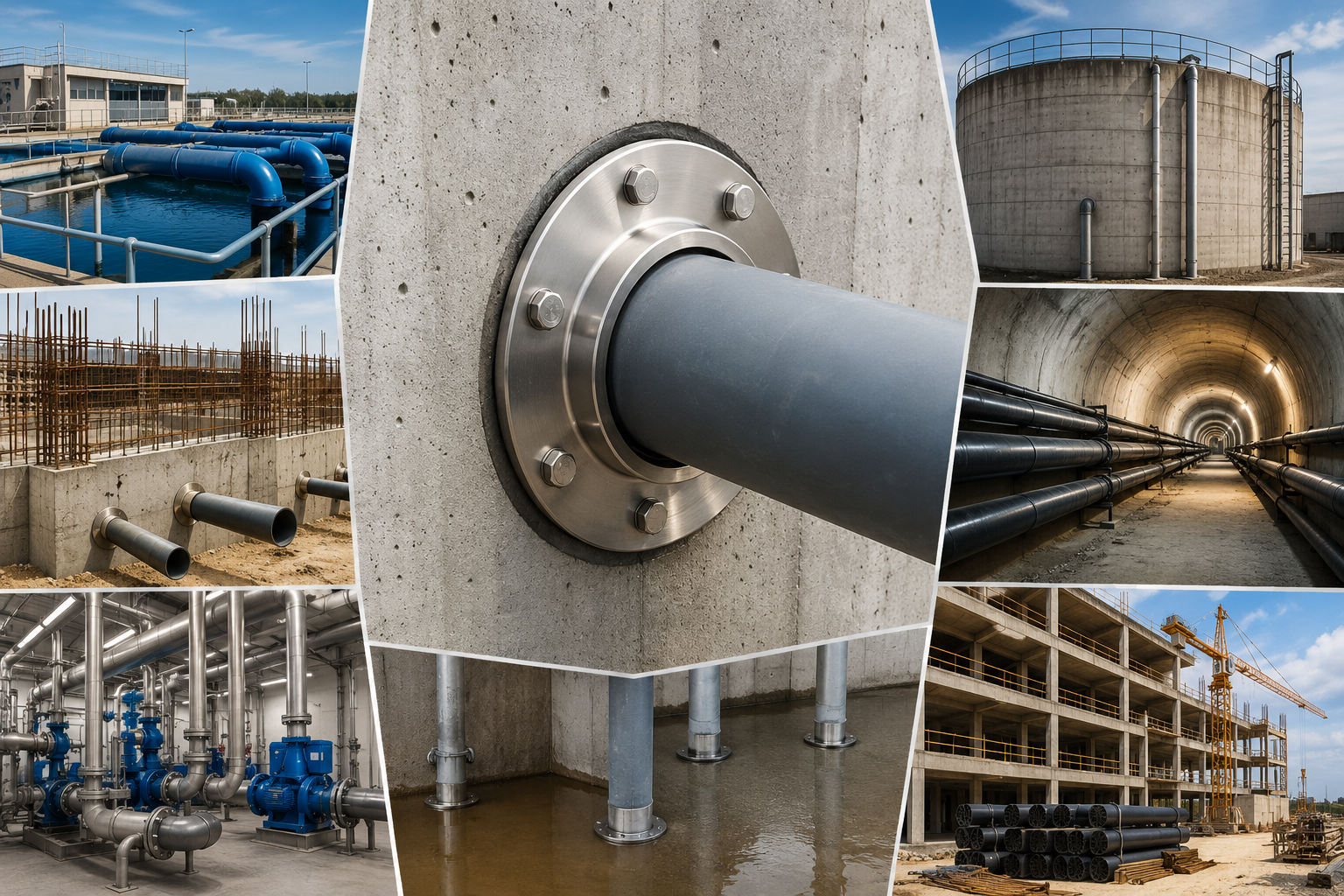
Puddle flanges are an important component in construction projects where pipes or conduits pass through concrete walls, floors, tanks, and other structures that need to remain watertight. They help reduce the risk of water seepage around pipe penetrations and create a more reliable connection between the pipe and surrounding concrete.
Puddle flanges are very helpful for infrastructure, drainage, water management, and industrial projects in Dubai and throughout the United Arab Emirates.
However, where are puddle flanges used? These are ten typical uses for puddle flanges in construction.
1. Water Treatment Plants
Water treatment facilities contain extensive networks of pipes passing through concrete structures. Puddle flanges help provide a watertight barrier around these pipe penetrations, helping protect concrete structures from unwanted water ingress.
2. Sewage and Wastewater Treatment Facilities
Construction materials may be exposed to moisture and potentially corrosive substances in wastewater conditions. Puddle flanges are useful around pipe penetrations in sewage treatment plants and related infrastructure where reliable sealing is important.
3. Underground Water Tanks
Effective waterproofing is necessary for subterranean water tanks since water can enter through construction joints and pipe openings. When pipes travel into concrete tank walls or floors, puddle flanges aid in creating a sealed area.
4. Utility Tunnels
Essential utilities like water, drainage, and other pipelines are housed in utility tunnels. Controlling water penetration is crucial because these constructions are frequently underground. Puddle flanges can aid in shielding pipe penetrations from moisture and groundwater.
5. Drainage Systems
Pipes typically travel through concrete structures and chambers as part of drainage infrastructure. Puddle flanges offer a workable way to close these openings and maintain the system’s overall watertightness.
6. Pumping Stations
Pumping stations transport water or wastewater using a variety of pipes and connectors. To reduce leaks and preserve structural integrity, puddle flanges can be placed around pipes that pass through concrete walls and floors.
7. Industrial Facilities
Complex pipe systems for water, drainage, and process applications are common in factories and other industrial buildings. Puddle flanges can offer long-lasting sealing around pipe penetrations in concrete structures, depending on the needs of the project.
Because of their strength and resistance to corrosion, stainless steel choices might be especially appropriate for harsh settings. Flow Tech also provides stainless steel and uPVC puddle flange solutions for different project requirements.
8. Residential and Commercial Buildings
Puddle flanges are not limited to major infrastructure projects. Additionally, they can be utilized in residential and commercial construction when water-resistant pipe penetrations are needed for concrete tanks, basement constructions, drainage chambers, or other locations.
9. Infrastructure Projects
Underground utilities, drainage networks, water systems, and concrete structures are frequently included in large infrastructure projects. Puddle flanges can support these applications by helping prevent water from traveling along the space surrounding pipe penetrations.
10. Waterproof Concrete Structures
Puddle flanges with the right specifications may be beneficial for any concrete construction where water tightness is crucial. A number of variables, including pipe diameter, material, installation conditions, pressure, and project specifications, determine the appropriate product.
Why Choose Flow Tech for Puddle Flanges?
In the UAE, Flow Tech Trading FZ-LLC provides puddle flange solutions for industrial, infrastructure, and construction uses. Our product range includes stainless steel and uPVC puddle flanges, with custom sizes and configurations available for different project requirements.
Flow Tech prioritizes rapid delivery, customized fabrication, high-quality materials, and technical assistance. We work on projects in Ras Al Khaimah, Dubai, Sharjah, Ajman, and other regions of the United Arab Emirates.
For contractors, MEP professionals, engineers, and project managers, choosing the right puddle flange should involve more than simply selecting a size. It is important to take into account material compatibility, pipe size, ambient circumstances, waterproofing needs, and installation criteria.
Conclusion
Puddle flanges play a valuable role in construction projects where pipes penetrate concrete structures and water ingress needs to be controlled. They offer an efficient method of pipe penetration sealing for anything from water treatment plants and underground tanks to drainage systems, utility tunnels, pumping stations, and industrial facilities.
Choosing the appropriate puddle flange supplier, material, size, and arrangement can improve waterproofing and long-term system performance for projects in Dubai and throughout the United Arab Emirates. Flow Tech offers puddle flange solutions that are tailored to meet various infrastructure and building needs.
FAQs
1. What is a puddle flange used for?
A puddle flange helps create a watertight seal where pipes pass through concrete walls, floors, tanks, and other structures.
2. Where are puddle flanges commonly used?
They are commonly used in water tanks, treatment plants, drainage systems, pumping stations, utility tunnels, and industrial facilities.
3. Which material is best for puddle flanges?
The suitable material depends on the application. Stainless steel and uPVC are commonly selected based on environmental conditions, pipe requirements, and project specifications.