
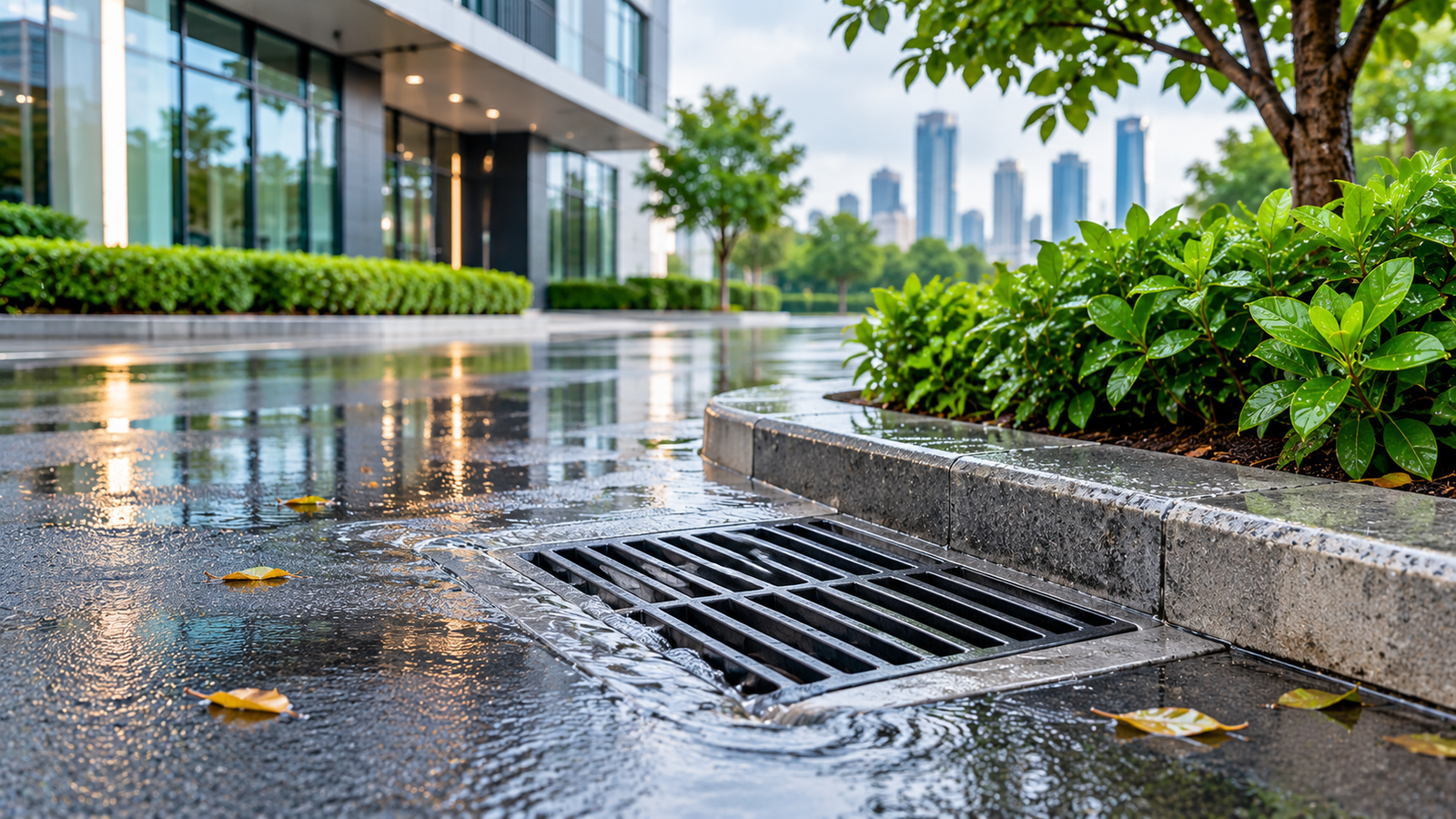
Effective surface water drainage is essential for protecting buildings, parking areas, roads and other outdoor spaces from rainwater accumulation. During rainfall water flowing across paved surfaces can carry leaves, sand, dirt and other debris into drainage systems. Without collection points these materials may obstruct drainage routes and affect water flow.
A catch basin provides a way to collect surface runoff and retain certain debris before water enters the connected drainage network. Choosing the system involves understanding its components, installation requirements, material options and maintenance needs.
This guide explains how catch basins work, where they are used and what project teams should consider when selecting a solution.
What Is a Catch Basin?
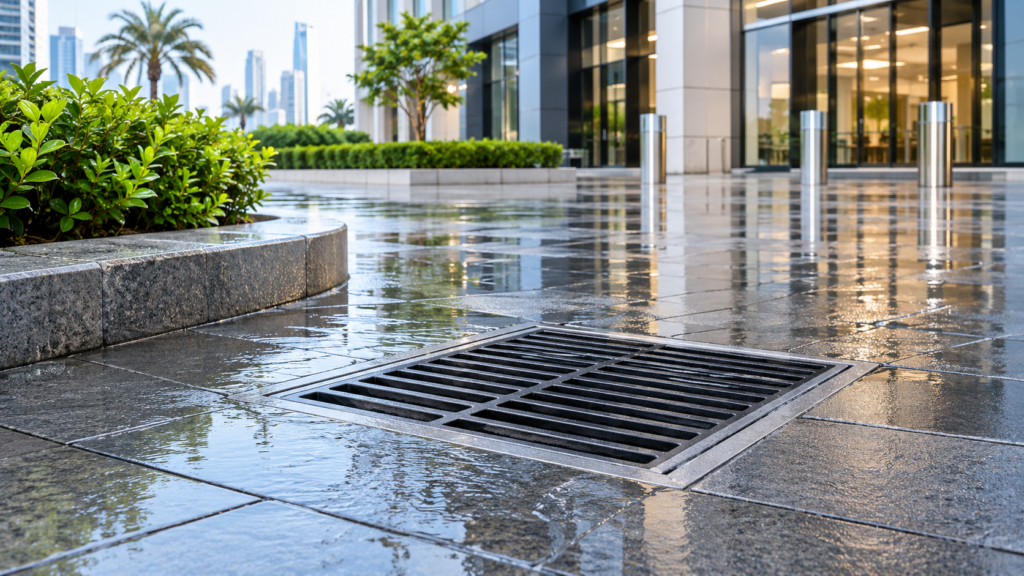
A catch basin is a drainage collection unit installed at selected points across surfaces. It receives surface water through an opening or drainage grate and directs it towards a connected underground drainage pipe.
Depending on the product design a catch basin may include a collection chamber, grate, outlet connection and removable debris or sediment bucket.
The chamber provides a space where heavier materials can settle or collect of immediately entering the downstream drainage network. This can make inspection and cleaning easier.
Catch basins are commonly installed in:
- building surroundings
- Parking areas and driveways
- Industrial facilities and warehouses
- Pedestrian walkways and paved courtyards
- Residential developments
- Landscaped areas with designated drainage points
The exact configuration depends on the surface layout expected water flow and drainage design.
How Does a Catch Basin Work?
Understanding the operating process helps project teams select and maintain the system more effectively.
A typical catch basin works through the stages:
- Surface water collection: Rainwater flows across the surrounding surface towards the drainage inlet.
- Entry through the grate: Water enters the catch basin through its opening or grate.
- Debris collection: Leaves, sand and other heavier materials may be retained inside the chamber or a removable collection bucket depending on the design.
- Water discharge: Collected water flows through the outlet connection into the drainage pipe.
- Routine cleaning: Accumulated debris and sediment are removed during maintenance to help maintain drainage performance.
A catch basin is not a solution to every drainage problem. Its performance depends on sizing, suitable positioning, adequate outlet capacity and proper connection to the wider drainage network.
Catch Basin vs Gully vs Manhole: Understanding the Differences
These drainage components may look similar in some installations, but they serve different purposes.
| Component | Main purpose | Typical application |
|---|---|---|
| Catch basin | Collects surface runoff and may retain debris or sediment | Parking areas, paved surroundings and outdoor spaces |
| Gully | Collects surface water and transfers it into a drainage system | Roads, yards and paved areas |
| Manhole | Provides access to underground drainage pipes for inspection and maintenance | Underground drainage networks |
Why Are Catch Basins Important for Commercial Drainage?
1. Helps Manage Surface Water
Catch basins provide designated collection points for rainwater flowing across surfaces. When positioned correctly they help runoff towards the intended drainage network.
2. Helps Retain Debris
Leaves, sand and other materials can enter drainage systems during rainfall. A suitable catch basin design may retain some of this debris before it reaches pipes.
This does not eliminate the need for cleaning. It can make debris removal more manageable.
3. Supports Easier Maintenance
Catch basins with chambers or removable collection buckets can make inspection and cleaning more convenient. Maintenance teams can check accumulated sediment. Remove collected material without needing to access the entire underground drainage network.
4. Helps Protect Outdoor Areas
managed surface runoff can contribute to water accumulation around entrances, walkways, parking areas and building foundations.
A designed drainage arrangement can help direct water away from these locations and reduce avoidable water-management problems.
Understanding Catch Basins, with GRP Buckets
Some catch basin products are designed with a GRP bucket.
GRP stands for Glass Reinforced Plastic, a material made using glass fibres and a resin matrix. It is used in building and infrastructure applications because its properties can include corrosion resistance and a relatively low weight compared with certain traditional materials.
A catch basin with a GRP bucket may provide a collection section for retaining debris or sediment depending on the manufacturers design.
Before selecting this type of product consider:
- Material suitability: Check whether the GRP material is suitable for the expected installation environment.
- Bucket accessibility: Confirm that the collection bucket can be removed and reinstalled conveniently.
- Capacity: Ensure the collection section is suitable for the expected debris load and cleaning frequency.
- Compatibility: Check that the bucket fits the catch basin chamber and does not interfere with the intended water outlet.
- Maintenance requirements: Review the manufacturers recommendations for cleaning, handling and inspection.
The actual performance and dimensions should always be confirmed using the products datasheet.
How to Choose the Right Catch Basin for Your Project
Selecting a catch basin based on its external appearance or price can lead to problems during installation and operation. The following factors should be reviewed before purchasing.
1. Assess the Drainage Area
Start by identifying the surface area that will discharge water into the catch basin. A small pedestrian walkway and a large commercial parking area may have different drainage requirements.
The drainage designer should consider the contributing area, surface slope expected rainfall intensity and the number and location of collection points.
2. Check the Required Capacity
The catch basin and its outlet must be suitable for the expected water flow. Capacity depends on factors, including the inlet arrangement, chamber design, outlet size and downstream drainage conditions.
Avoid selecting a product simply because its dimensions appear suitable. Confirm the required performance with the project designer or supplier.
3. Consider the Installation Location
The location of a catch basin affects how effectively it collects runoff.
Common considerations include:
- points where surface water naturally collects
- Areas near building entrances and paved boundaries
- Parking areas where runoff needs to be collected
- Locations along suitable surface drainage routes
- Points that remain accessible for inspection and cleaning
The final positions should be coordinated with the site levels paving layout and drainage drawings.
4. Select Suitable Materials
Material selection should account for the installation environment, expected loading, exposure conditions and maintenance requirements.
GRP, polymer-based materials, concrete and other suitable construction materials may be used in drainage applications. However their suitability depends on the product design and project conditions.
For installations exposed to vehicle traffic, the load‑bearing capacity of the assembly including the cover or grate and supporting frame must be verified.
5. Review Maintenance Access
A drainage unit that is difficult to access can become challenging to maintain.
Check whether the grate, cover or collection bucket can be removed safely. Also consider whether maintenance personnel will have working space to inspect the chamber and remove accumulated debris.
Common Catch Basin Installation Mistakes to Avoid
a suitable product may not perform as intended if the installation is poorly planned.
Here are some common issues project teams should watch for:
positioning: Installing a catch basin away from natural water collection points may allow water to accumulate elsewhere on the surface.
Insufficient surface slope: If the surrounding pavement does not direct water towards the inlet the basin may receive runoff than intended.
outlet connection: Poor alignment or incompatible pipe connections can affect drainage flow and create maintenance difficulties.
Unsuitable load rating: A grate or cover that is not designed for the expected traffic loading may become damaged under use.
Inadequate maintenance access: A system that cannot be opened or cleaned conveniently may be neglected over time.
Poor coordination, with paving levels: If the finished surface level is not coordinated with the grate height water may bypass the inlet. Collect around it.
Installation should follow drawings, product instructions and applicable project requirements.
Catch Basin Maintenance: A Practical Checklist
Regular maintenance helps keep surface drainage systems. The inspection frequency should depend on the surrounding environment, rainfall conditions and the amount of debris entering the system.
A practical checklist includes:
- Inspect the grate or inlet for blockages.
- Remove leaves, plastic, sand and other collected debris.
- Check the chamber for excessive sediment accumulation.
- Inspect removable GRP buckets, where provided.
- Check outlet connections for signs of blockage or damage.
- Confirm that covers and grates remain properly positioned.
- Arrange additional inspections after heavy rainfall where necessary.
Maintenance work should be carried out safely using procedures for accessing drainage chambers. Workers should not enter confined drainage spaces without the assessment, training and safety arrangements.
Questions to Ask Before Buying a Catch Basin
Before finalising a purchase, contractors and project managers can use the following checklist:
- What is the catch basins intended application?
- What are the chamber dimensions and outlet specifications?
- Is a debris or sediment bucket included?
- What material is used for the chamber and bucket?
- What load rating is specified for the grate and frame?
- Is the product compatible with the planned drainage pipe?
- What cleaning and maintenance access is available?
- Are drawings and product datasheets available?
Getting clear answers to these questions helps compare products based on actual project requirements rather than price alone.
Exploring Catch Basin Solutions in Dubai
Commercial and infrastructure projects require drainage products that’re suitable for their site conditions, installation arrangements and maintenance plans.
For projects in Dubai and across the UAE Flow Tech Dubai is a name to explore when sourcing drainage and building-related products, including its Catch Basin with GRP Bucket offering.
Before placing an order project teams should confirm the available dimensions, material details, outlet configuration, load requirements and technical documentation with the supplier. This helps ensure that the selected product is appropriate for the intended application.
Conclusion
Catch basins play a role, in managing surface water around commercial buildings, parking areas, industrial facilities and other paved spaces. By collecting runoff and retaining debris they can support the operation and maintenance of a wider drainage network.
Choosing the solution requires attention to drainage capacity, installation position, material suitability, load requirements, outlet compatibility and maintenance access.
With planning, suitable product selection and regular inspection catch basin systems can contribute to more effective surface water management and help maintain safer better-organised outdoor spaces.